
 Liposuction in Salzburg & Tullnerfeld
Liposuction is a very popular cosmetic procedure for shaping and contouring the body by removing excess fat deposits. During this minimally invasive procedure, fat is suctioned from specific areas, giving patients a more defined and toned appearance.
Jump straight to the desired topic?
- Liposuction – Fat removal on the abdomen, legs, buttocks
- Phases of the cosmetic surgery
- What are the risks associated with fat removal?
- Dr. Spiegl – an experienced plastic surgeon in Salzburg
- Costs for liposuction in Salzburg
- Typical questions from my patients (FAQ)
Liposuction – Fat removal on the abdomen, legs, buttocks
In this surgical technique, excess fat cells are suctioned from problem areas using a thin cannula to effectively reduce stubborn fat deposits that do not respond to diet and exercise. In the following sections, we will take a closer look at the goals and functioning of liposuction to provide a comprehensive understanding of this popular cosmetic procedure.
What is the goal of liposuction?
The main goal of liposuction is body contouring, not weight reduction. Liposuction offers the opportunity to improve one’s self-image and boost self-confidence by achieving a more proportioned silhouette. Contours can be enhanced – such as the abdominal muscles – or reduced, like classic “saddlebags.”
Various techniques can be used for liposuction, with Dr. Spiegl utilizing “PAL” (power-assisted liposuction). Here, the area to be treated is prepared before the actual suctioning using a special water-based solution. This solution contains, among other things, a local anesthetic and adrenaline, which minimizes bleeding and pain. Then, the fat is suctioned out through a few small incisions of about 3mm using a blunt, vibrating cannula.
Liposuction can achieve particularly beneficial results in various body regions such as the thighs, hips, and abdomen. Stubborn fat often accumulates in these areas, especially in women, which often cannot be reduced even through exercise. In men, liposuction can also effectively combat the “male breast” – gynecomastia.
Ultimately, the desired results of liposuction are tailored to each individual’s goals, with both genders benefiting from improved body aesthetics and renewed self-confidence.
How exactly does fat removal work?
Power-Assisted Liposuction (PAL) is a highly effective, safe, and popular liposuction technique. Here is a detailed explanation of how PAL works with Dr. Spiegl:
- 1. Infusion of the tumescent solution: The first step in PAL involves the infusion of a tumescent solution into the target areas. This solution is a combination of saline (sterile salt water), a local anesthetic (lidocaine), and a vasoconstrictor (epinephrine). The tumescent solution serves several purposes. First, the lidocaine numbs the area so the patient feels comfortable during the procedure. Second, the epinephrine constricts the blood vessels, reducing bleeding and minimizing postoperative bruising.
- 2. Suctioning fat cells with thin cannulas: Once the tumescent solution has taken effect, Dr. Spiegl uses special thin cannulas attached to a PAL device. These cannulas are equipped with small, vibrating tips that break up the fat cells and release them from the surrounding tissue. The gentle vibrations make it easier to detach the fat cells, thereby sparing surrounding structures such as blood vessels and nerves. The loosened fat cells are then suctioned out through the cannula.
- 3. Application of a compression bandage: To complete the procedure and achieve an optimal result, a compression bandage or garment is applied to the treated area. This compression bandage fulfills several important functions. It helps minimize swelling and fluid accumulation, promotes healing, and supports the newly shaped contours.
Which other methods are performed for liposuction?
There are several other advanced liposuction techniques; here is a brief overview:
- SmartSculpting™: This is a marketing term often associated with the use of laser or radiofrequency energy during liposuction. These energy-based methods liquefy the fat cells so they can be removed more easily.
- Tumescent Local Anesthesia (TLA): TLA uses a diluted tumescent solution, reducing the need for general anesthesia and allowing patients to remain awake during the procedure.
- Water-jet assisted liposuction (WAL): WAL uses a pressurized water jet to loosen and remove fat cells. It is a very gentle method that causes minimal injury to surrounding tissue. Sometimes, certain problem areas cannot be suctioned as effectively.
- Ultrasound-assisted liposuction: This technique uses ultrasound energy to liquefy the fat cells before they are suctioned. It is particularly effective for fibrous areas such as the male chest and lower legs.
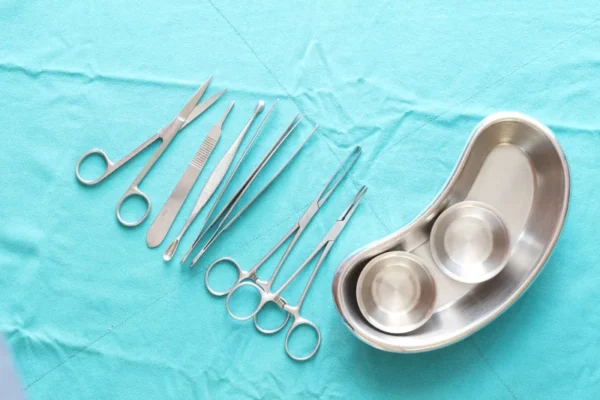 Phases of the cosmetic surgery
Liposuction involves a series of steps to improve the desired appearance and especially the contour of the body. The process generally proceeds in the following steps: consultation, examination, planning, operation, and aftercare.
Before the operation: Consultation and physical examination
Before liposuction, you will participate in a consultation with Dr. Spiegl. During this discussion, aesthetic goals are reviewed and you will undergo a physical examination. Afterwards, the areas to be treated are photographed and Dr. Spiegl creates an individual treatment plan. All patients receive information about anesthesia options, financial aspects, and postoperative recovery. This comprehensive process ensures that you are well-informed and perfectly prepared for a successful liposuction.
Comprehensive personal consultation
Dr. Spiegl places great importance on an individual and thorough consultation for liposuction to consider the unique needs and wishes of each patient. Understanding the patient’s goals serves as the foundation for the consultation. A thorough evaluation of the patient’s medical history and physical condition takes place – safety always comes first. Dr. Spiegl carefully assesses the areas to be treated, considering factors such as skin quality, fat distribution, and specific anatomical features.
Based on the examination and the specific goals of the patient, Dr. Spiegl creates a very individual treatment plan. This plan describes the chosen liposuction technique, the expected outcome, and possible risks or alternative methods. Patients participate actively in the decision-making process by choosing anesthesia options that suit their comfort, clarifying financial aspects, and establishing realistic expectations for postoperative recovery.
Dr. Spiegl’s patient-centered approach highlights the importance of addressing the needs and wishes of the patient. The treatment plan is carefully crafted to ensure that the patient’s individual goals are met, which ultimately promotes satisfaction and success.
In summary, Dr. Spiegl’s comprehensive personal consultation for liposuction aims to tailor the treatment plan to the individual needs and wishes of each patient. This patient-oriented approach is crucial for successful and gratifying results in liposuction.
High-quality materials for the treatment
High-quality materials play a decisive role in the safety, effectiveness, and overall success of liposuction. Dr. Spiegl exclusively uses precision-engineered cannulas, which are essential for precise fat removal through small skin incisions. They minimize trauma to the surrounding tissue, allowing even hidden parts of the body to be effectively modeled.
In aftercare, Dr. Spiegl also makes no compromises; brand-quality compression garments are used. In summary, the use of high-quality materials in liposuction is crucial for achieving the desired results. These materials contribute to patient comfort, precision, and postoperative care, enabling the creation of a sculpted, contoured, and aesthetically pleasing body.
Operation
Dr. Spiegl performs the surgery in Salzburg at the Hospital of the Brothers of Mercy (Krankenhaus der Barmherzigen Brüder), where he can rely on uncompromising quality, the highest standards, and his trusted team. This gives you an additional – but important – piece of security. In Lower Austria, the operation is performed in a renowned day-clinic surgical center, also with perfect care and in a highly professional setting.
Outpatient stay
A standard outpatient stay for liposuction generally involves the patient arriving at the surgical facility, undergoing the procedure, and being discharged on the same day. Below is what you can generally expect.
You arrive at the surgical facility on the scheduled day. Preoperative examinations, including a final discussion with Dr. Spiegl and the anesthesiologist, may be performed. You change into a surgical gown and are prepared for the procedure. After the operation, you are taken to a recovery room where you are closely monitored while waking up from anesthesia. After this phase, you are brought back to the day clinic where you can rest and wait for the postoperative visit by Dr. Spiegl. Upon discharge, you will receive instructions on specific precautions, medications, and follow-up appointments.
The duration of the outpatient stay for breast augmentation [sic – as per original text] is usually several hours, from arrival to discharge. Once you have sufficiently recovered from the anesthesia and the surgical team is convinced of your stability, you are usually discharged home in the company of a responsible adult.
Follow Dr. Spiegl’s postoperative care instructions to promote healing and minimize the risk of complications.
It is important to know that recovery time can vary depending on individual factors, the extent of the procedure, and the surgical technique used. Patients should strictly follow Dr. Spiegl’s recommendations and attend all scheduled follow-up appointments to ensure a smooth recovery and the best possible result.
Duration of the operation
The duration of a surgical procedure for liposuction can depend on various factors. These include the surgical technique used and individual anatomy, as well as whether other procedures are performed simultaneously. On average, a simple liposuction takes about 1 to 2 hours. However, it is important to know that this is a general estimate and the actual operation time may be shorter or longer.
Dr. Spiegl can give you a more accurate estimate of the expected operation time based on your individual circumstances. Remember that while shorter operation times can be advantageous, the quality of the procedure and the surgeon’s attention to detail are crucial for achieving the desired result and minimizing the risk of complications.
Postoperative phase
The postoperative phase of liposuction is a critical period during which your body heals and adjusts to the changes caused by the surgery. Proper care and adherence to postoperative instructions are crucial for achieving optimal results and minimizing the risk of complications.
Immediately after the operation, you will spend some time in the recovery room while the effects of the anesthesia wear off. During this phase, you may experience fatigue, drowsiness, and slight discomfort, which however subsides within a few hours, and you can usually leave the hospital on the same day. The first few days after the surgery are characterized by swelling, bruising, and mild to moderate discomfort, which can be well-treated with standard pain relievers. Depending on the region of the liposuction, you may also need to administer a daily thrombosis prophylaxis – a blood-thinning injection. This will be explained and demonstrated to you.
In the first 6 weeks, most of the swelling will disappear and the incision sites will heal. During this phase, you normally have a check-up with Dr. Spiegl after one, two, and six weeks. Compression garments must generally be worn during this time.
Inability to work and sport
The impact of liposuction on the ability to work and exercise depends on the individual, the type of activity, the suctioned regions, and the patient’s general healing process. Here is a general overview:
- Return to work: The timeframe for returning to work after liposuction depends on factors such as the type of work and the progress of healing. If your work involves only minimal physical activity and requires no heavy lifting, you may be able to return to work just one week after the surgery, as soon as you no longer need pain medication and feel comfortable. If your work involves light physical activities or movements, you may need to pause for 1-2 weeks. You should avoid all activities that strain the treated areas. If your profession involves heavy lifting, strenuous physical activity, or manual labor, you may need to take several weeks off to ensure proper healing and avoid complications.
- Return to sport: When exercising or engaging in physical activities after liposuction, you must be cautious and follow Dr. Spiegl’s recommendations. Light activities such as walking or gentle stretching can usually be resumed within a few days to a week after surgery. Listen to your body and avoid any activities that cause discomfort or strain. Low-impact exercises such as stationary cycling or light jogging can be gradually resumed after a few weeks. High-impact sports, weightlifting, and activities requiring intense full-body movements should be avoided for several weeks. It is important to know that the healing process varies for each person and that you must strictly follow your surgeon’s instructions. Pushing yourself too hard or returning to sport too early can increase the risk of complications, such as prolonged swelling or wound issues.
When are the results visible?
The results of liposuction are not immediately visible after the procedure. Usually, from the second week after the operation, the swelling has subsided enough that results become visible. It is important to note that the final result can only be fully assessed after about 12 weeks. During this time, postoperative swelling and any bruising subside, and the treated areas take on their final shape.
To promote skin tightening and optimize results, Dr. Spiegl recommends special massage techniques. These massages can help improve circulation, support lymphatic drainage, and increase skin elasticity. Combined with a healthy diet and regular exercise, these measures can help the skin tighten after liposuction and make the desired contours stand out even better.
What are the risks associated with fat removal?
Although liposuction is a largely safe procedure, like any surgical measure, it carries certain risks. Here are some of the potential risks and recommendations for minimizing them:
- Irregular contours: Without proper aftercare and compression, there is a risk that the treated areas will show irregular contours. To avoid this, it is recommended to wear compression clothing for 4-6 weeks after surgery.
- Infections: Although infections occur rarely, there is always a risk of postoperative infection. This can be minimized through careful wound care and adherence to postoperative instructions.
- Wound healing disorders: In some cases, wound healing disorders may occur, which can lead to scarring or a delayed healing process.
- Numb skin: After liposuction, the skin may be temporarily numb or fuzzy. This is usually temporary and improves over time.
It is important to emphasize that most risks in liposuction occur rarely and in most cases can be avoided or minimized if postoperative instructions are carefully followed. The use of compression clothing is an important measure to prevent irregular contours and support the healing process.
Dr. Spiegl – the experienced plastic surgeon in Salzburg
Dr. Matthias Spiegl is a specialist in Plastic, Reconstructive, and Aesthetic Surgery and holds Swiss and British medical licenses in addition to the Austrian one. Following his highly specialized international training with stations in England, Switzerland, and Scotland, he settled in Salzburg and Tulln. His specialization includes, among others, aesthetic breast surgery, which he performs conscientiously and without compromise at a high level.
As an additional qualification, Dr. Spiegl completed the European specialist examination in 2018 and is entitled to call himself a “Fellow of the European Board of Plastic, Reconstructive and Aesthetic Surgery” (FEBOPRAS). This additional qualification is particularly rare in Austria and further distinguishes the specialist in cosmetic surgery. Dr. Spiegl is a member of numerous national and international professional societies, another mark of quality:
- International Society of Aesthetic Plastic Surgery (ISAPS)
- Austrian Society for Plastic, Aesthetic and Reconstructive Surgery
- Swiss Society for Plastic, Reconstructive and Aesthetic Surgery
- Fellow of the European Board of Plastic, Reconstructive and Aesthetic Surgery
- General Medical Council (United Kingdom)
- Fellow of the American College of Surgeons (FACS)
Costs for liposuction in Salzburg & Tulln
The costs for liposuction with Dr. Spiegl in Salzburg or Tulln can vary depending on various factors and usually range between 3,000 and about 7,500 euros. This price range takes into account a variety of factors that can influence the total cost. The most important factors include:
- Number of areas to be suctioned: The extent of the procedure is a major cost factor. Generally, the more body areas that need treatment, the higher the cost.
- Complexity of the procedure: The difficulty and duration of the procedure can affect the cost. More complex cases may require additional time and expertise, which can impact the price.
- Type of anesthesia used: The choice of anesthesia, whether local, twilight sleep, or general, can influence the cost. General anesthesia is typically more expensive than local anesthesia.
It is important for patients to consider all these factors when evaluating the total costs for liposuction. An individual consultation with Dr. Spiegl in Salzburg or Tulln can help determine the exact costs and the best options for the procedure.
Typical questions from my patients (FAQ)
Which regions are particularly well-suited for liposuction?
Regions such as the abdomen, hips, thighs, buttocks, and double chin are particularly well-suited for liposuction, as they are typical areas where stubborn fat accumulations can build up.
Will new fat form again after liposuction?
After liposuction, new fat accumulations can form in the treated areas if an unhealthy diet and lack of exercise are maintained. The remaining fat cells in other body regions can also increase in size. Therefore, a healthy lifestyle is important to maintain long-term results.
What should be considered directly after liposuction?
After liposuction, it is important to strictly follow Dr. Spiegl’s postoperative instructions, including rest, wearing compression clothing, and avoiding excessive exertion to ensure a smooth recovery and optimal results.
Can liposuction be performed on several body parts at the same time?
Yes, liposuction on multiple body parts can be performed in one session, provided it is medically justifiable and safe, depending on the individual patient’s situation and the extent of the procedure.
Can liposuction be repeated multiple times?
Yes, it is possible to repeat liposuction multiple times if further corrections or improvements are desired, although individual tolerance and Dr. Spiegl’s recommendations should be taken into account.
How much does liposuction cost?
The costs for liposuction with Dr. Spiegl in Salzburg or Tulln can vary depending on the effort and usually range between 3,000 and about 7,500 euros.
Does health insurance pay for the costs of liposuction?
Under certain circumstances, liposuction for pathological lipedema may be covered by health insurance. Dr. Spiegl is a private doctor without insurance contracts, so the service must be paid privately and the invoice then submitted to the appropriate insurance fund.


