
 Specialist Diagnosis and Surgical Therapy with Dr. Matthias Spiegl, Experienced Hand Surgeon
Modern and gentle treatment of cubital tunnel syndrome (ulnar nerve entrapment)
Skip directly to your topic of interest?
- What is cubital tunnel syndrome?
- When is surgery recommended?
- Surgical treatment of cubital tunnel syndrome
- Process of the surgery, downtime, and aftercare
- Advantages of surgery with Dr. Matthias Spiegl
- Costs, appointment scheduling & consultation
- Dr. Matthias Spiegl – Your experienced hand surgeon in Salzburg & Tullnerfeld
- Frequently asked questions (FAQ) about cubital tunnel syndrome
What is cubital tunnel syndrome?
Cubital tunnel syndrome – also known as ulnar nerve compression or sulcus ulnaris syndrome – refers to a narrowing or entrapment of the ulnar nerve in the elbow region. The nerve runs behind the inner bony prominence of the elbow (commonly known as the “funny bone”) inside a bony groove called the cubital tunnel.
If pressure increases within this tunnel, typical symptoms arise:
- Tingling or numbness in the ring and little fingers
- Weakness in the hand
- Clumsiness or uncertainty when gripping or typing
- In advanced cases: muscle wasting (atrophy) of the hand muscles
Left untreated, cubital tunnel syndrome can lead to permanent nerve damage. Common causes of the condition and contributing factors include:
- Repetitive bending or leaning on the elbow
- Scarring or thickening following injuries
- Bony alterations (e.g., osteoarthritis)
- Swelling or inflammation of the soft tissues
- Congenital anatomical narrowings
Cubital tunnel syndrome is the second most common nerve entrapment disorder of the upper extremity, trailing only carpal tunnel syndrome.
 When is surgery recommended?
Surgery is recommended when:
- Tingling or numbness persists continuously,
- Weakness or clumsiness in the hand increases,
- Conservative treatments (splints, rest, physical therapy) bring no improvement, or
- Electrophysiological tests show nerve damage.
The goal of the procedure is to relieve pressure on the nerve in order to preserve its function and alleviate symptoms.
Surgical treatment of cubital tunnel syndrome
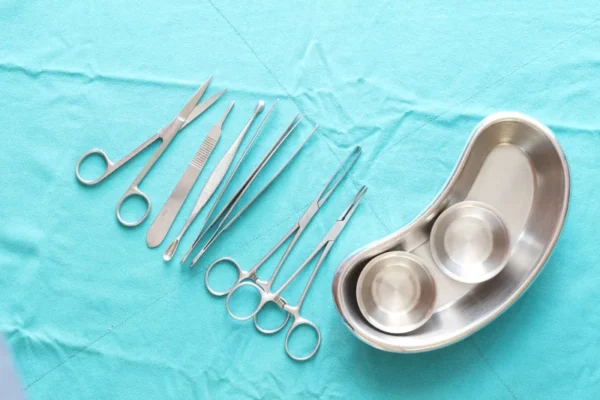
Dr. Matthias Spiegl performs cubital tunnel syndrome surgery under regional anesthesia (arm block), optionally combined with sedation (twilight sleep) or general anesthesia. The procedure takes about one hour and is performed on an outpatient basis; thanks to modern, tissue-sparing surgical techniques, suction drains are not required.
Depending on the severity, the following techniques are utilized:
- Neurolysis (decompression): The constricting tissue around the nerve is carefully released.
- Anterior transposition: In cases of severe narrowing or instability, the nerve is relocated to a protected position in front of the bone.
These techniques allow for a precise and sustainable decompression of the nerve while maximizing the preservation of surrounding structures.
Process of the surgery, downtime, and aftercare
Surgery details
- Duration: approx. 1 hour
- Anesthesia: arm block with or without sedation, alternatively general anesthesia
- Type of procedure: outpatient
- Drains: none required
- Goal: Decompression of the nerve, restoration of sensitivity and strength
Aftercare and healing phase
After the surgery, the arm is briefly immobilized using a thick dressing, but a splint is generally not necessary. Gentle movement of the fingers is encouraged after just a few days to prevent adhesions. The downtime is relatively short, but heavy strain should be avoided for 2–3 weeks. Here is the key information regarding aftercare:
- Wound check / suture removal: after 10–14 days
- Fit for work: after approx. 2 weeks (depending on the activity)
- Sports & heavy exertion: after approx. 4 weeks
- Final result: after 6–12 months
The recovery of nerve function occurs gradually, as nerves regenerate slowly. Long-lasting good results are typically achieved; however, a recurrence (relapse) is possible.
Advantages of surgery with Dr. Matthias Spiegl
- Outpatient or short-term inpatient treatment
- Gentle surgery without the need for drains
- Anesthesia according to preference: arm block, sedation, or general anesthesia
- Many years of experience in hand surgery
- Precise microsurgical technique and personalized care
- Treatment available at two locations: Salzburg & Tullnerfeld
Costs, appointment scheduling & consultation
The costs for cubital tunnel syndrome surgery start at **€3,000**.
In a personal consultation, Dr. Spiegl will explain the treatment options, costs, process, and recovery time in detail. The consultation also provides an opportunity to address individual questions and choose the best form of therapy together.
You should definitely bring all available medical reports from your patient history. If you decide to proceed with the surgery with Dr. Spiegl, a date for the operation will be scheduled together.
 Dr. Matthias Spiegl – Your experienced hand surgeon in Salzburg & Tullnerfeld
Dr. Spiegl is a specialist in Plastic, Reconstructive, and Aesthetic Surgery with many years of experience in hand and microsurgery. In addition to his Austrian medical license, he also holds Swiss and British medical licenses. Following his highly specialized international training with residencies in England, Switzerland, and Scotland, he settled in Salzburg and Pixendorf. His specialization includes, among other areas, hand surgery, which he performs conscientiously, to a high standard, and without compromise.
As an additional qualification, Dr. Spiegl completed the European Board Exam in 2018 and is entitled to call himself a “Fellow of the European Board of Plastic, Reconstructive and Aesthetic Surgery” (FEBOPRAS). This additional qualification is rare, particularly in Austria, and further distinguishes the specialist. Dr. Spiegl is a member of numerous national and international professional societies, which serves as an additional quality feature:
- International Society of Aesthetic Plastic Surgery (ISAPS)
- Austrian Society for Plastic, Aesthetic and Reconstructive Surgery
- Swiss Society for Plastic, Reconstructive and Aesthetic Surgery
- Fellow of the European Board of Plastic, Reconstructive and Aesthetic Surgery
- General Medical Council (United Kingdom)
- Fellow of the American College of Surgeons (FACS)
Frequently asked questions (FAQ) about cubital tunnel syndrome
How does cubital tunnel syndrome manifest?
Typical symptoms include tingling, numbness, or a burning sensation in the ring and little fingers, often intensified when bending the elbow.
How quickly does the nerve recover after surgery?
Improvement usually occurs within a few weeks, with the final result achieved after 6–12 months.
When can I return to work or sports?
Light activities are possible again after about 2 weeks, while sports or physical exertion can be resumed after around 4 weeks.
Can the condition recur?
Recurrences are rare but can happen. A precise surgical technique and consistent aftercare significantly lower this risk.


