
 Specialist Diagnosis and Precise Surgery with Dr. Matthias Spiegl, Specialist for Hand Surgery
Modern and effective treatment of Dupuytren’s disease (Dupuytren’s contracture)
What is Dupuytren’s disease?
Dupuytren’s disease – also called Dupuytren’s contracture – is a benign connective tissue disorder of the palm. It involves the formation of nodules and cords under the skin, which can progressively cause fingers to remain permanently in a bent position.
The ring and little fingers are most frequently affected, and occasionally multiple fingers simultaneously. In advanced stages, the hand can no longer be fully opened – leading to significant limitations in daily life.
Skip directly to your topic of interest?
- Causes and risk factors
- When is surgery recommended?
- Surgical treatment of Dupuytren’s disease with Dr. Spiegl
- Process of the surgery, downtime, and aftercare
- Advantages of treatment with Dr. Matthias Spiegl
- Costs, appointment scheduling & consultation
- Dr. Matthias Spiegl – Your specialist for hand surgery in Salzburg & Tullnerfeld
- Frequently asked questions (FAQ) about Dupuytren’s disease
Causes and risk factors
The exact cause of Dupuytren’s disease has not yet been fully clarified.
Known risk factors include:
- genetic predisposition (familial occurrence)
- male gender (frequently men over 50 years old)
- Diabetes mellitus
- nicotine and alcohol consumption
- previous hand injuries or surgeries
Dupuytren’s disease is non-inflammatory and non-malignant, but it usually progresses slowly if left untreated.
 When is surgery recommended?
Surgery should be considered when:
- fingers can no longer be fully straightened,
- nodules and cords increase,
- the function of the hand is limited in daily life, or
- conservative measures (e.g., splints or physical therapy) do not help.
The procedure can restore finger mobility and stop the progression of the disease.
Surgical treatment of Dupuytren’s disease with Dr. Spiegl
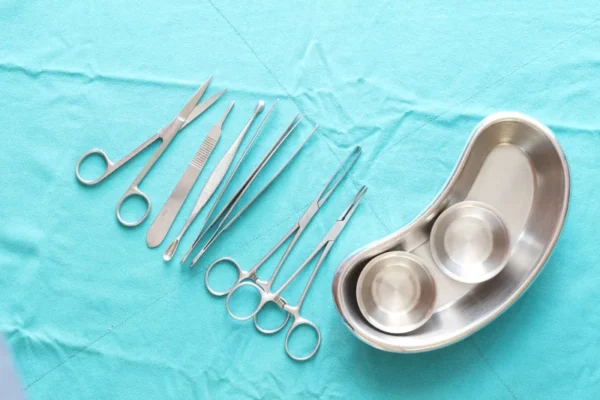
Dr. Matthias Spiegl performs surgery for Dupuytren’s disease under regional anesthesia or general anesthesia – depending on the findings and individual prerequisites. The goal is to release or remove the diseased connective tissue cords in order to allow the fingers to move freely again.
Techniques used
- Selective fasciectomy: Removal of the affected connective tissue portions while preserving healthy structures.
- Partial fasciectomy: Targeted decompression of the affected finger segments.
- In selected cases: Minimal-invasive methods with particularly tissue-sparing access.
These modern surgical techniques enable a precise, safe, and function-preserving approach with very good long-term results.
Process of the surgery, downtime, and aftercare
Surgery details
- Duration: approx. 45–60 minutes
- Anesthesia: regional anesthesia (brachial plexus) or general anesthesia
- Type of treatment: outpatient or short-term inpatient
- Goal: Restoration of finger extension and hand function
Healing phase
After the surgery, the hand is immobilized for a short period. After just a few days, targeted mobilization begins to promote mobility and prevent adhesions. Consistent aftercare supports healing and significantly reduces the risk of a relapse.
- Wound check / suture removal: after 14 days
- Light activities (e.g., office work): after approx. 5–7 days
- Physical or occupational therapy: starting from the 1st–2nd week to promote mobility
- Full resilience: after approx. 3–6 weeks
- Final result: after around 6–8 weeks
Advantages of treatment with Dr. Matthias Spiegl
- Specialist in Plastic, Reconstructive, and Aesthetic Surgery with a focus on hand surgery
- Many years of experience in treating Dupuytren’s disease
- Modern, precise surgical techniques for long-lasting results
- Gentle approach under regional or general anesthesia
- Short recovery times and rapid restoration of hand function
- Treatment available at two locations: Salzburg & Tullnerfeld
Costs, appointment scheduling & consultation
The costs of Dupuytren’s surgery depend on individual presentation, the chosen surgical technique, and the extent of the findings. Costs between **€2,000 and €4,000** are to be expected.
In a personal consultation, Dr. Spiegl provides detailed information regarding:
- process and type of surgery
- possible forms of anesthesia
- aftercare and recovery time
- costs and organizational details
Together, the optimal, individually tailored therapy will be determined. The consultation also provides an opportunity to address individual questions and choose the best form of therapy together. You should definitely bring all available medical reports from your patient history. If you decide to proceed with the surgery with Dr. Spiegl, a date for the operation will be scheduled together.
 Dr. Matthias Spiegl – Your specialist for hand surgery in Salzburg & Tullnerfeld
Dr. Spiegl is a specialist in Plastic, Reconstructive, and Aesthetic Surgery with many years of experience in hand and microsurgery. In addition to his Austrian medical license, he also holds Swiss and British medical licenses. Following his highly specialized international training with residencies in England, Switzerland, and Scotland, he settled in Salzburg and Pixendorf. His specialization includes, among other areas, hand surgery, which he performs conscientiously, to a high standard, and without compromise.
As an additional qualification, Dr. Spiegl completed the European Board Exam in 2018 and is entitled to call himself a “Fellow of the European Board of Plastic, Reconstructive and Aesthetic Surgery” (FEBOPRAS). This additional qualification is rare, particularly in Austria, and further distinguishes the specialist. Dr. Spiegl is a member of numerous national and international professional societies, which serves as an additional quality feature:
- International Society of Aesthetic Plastic Surgery (ISAPS)
- Austrian Society for Plastic, Aesthetic and Reconstructive Surgery
- Swiss Society for Plastic, Reconstructive and Aesthetic Surgery
- Fellow of the European Board of Plastic, Reconstructive and Aesthetic Surgery
- General Medical Council (United Kingdom)
- Fellow of the American College of Surgeons (FACS)
Frequently asked questions (FAQ) about Dupuytren’s disease
What happens if Dupuytren’s disease is left untreated?
The disease usually progresses and leads to permanent flexion contractures of the fingers in the long term. However, how quickly the disease progresses is difficult to estimate.
Is the surgery painful?
No. The procedure is performed under regional or general anesthesia – you will not feel any pain during the operation.
How soon can I return to work after the surgery?
Light activities are usually possible again after one week, while full resilience is restored after about four to six weeks.
How much does the surgery for Dupuytren’s disease cost?
The costs of the operation can vary greatly, but they start at €2,000.
Can Dupuytren’s disease return?
In rare cases, yes – especially if there is a genetic predisposition. However, the risk can be minimized through consistent surgery and thorough aftercare.


